Thursday, June 29, 2006

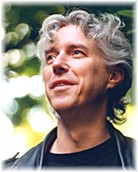
Blogger's choice in Phnom Penh

Without hesitation, I recommend the Dara Reang Sey hotel in Phnom Penh if you are looking for a family-run base which offers a friendly welcome, affordable rooms between $6-18 per night, good quality Khmer food and a great location near the riverfront. Two sisters, Dara and Reangsey, are in charge and make a real effort to look after their guests. I've stayed there countless times and have never received anything other than a great welcome and first-class personal service. They've recently expanded and opened up more rooms just across the street and have plans to open up a sister hotel in Siem Reap in the near future.

Dara (left) and Reangsey (right) guarantee a warm welcome at the Dara Reang Sey Hotel in Phnom Penh.

Wednesday, June 28, 2006

Madeleine Giteau - curator of history

Madeleine Giteau left a rich body of scholarly work including publications on Khmer sculpture and iconography and the art of Laos, when she died in February 2005, aged eighty-six. She was a prominent member of the Ecole Francaise de l'Extreme-Orient (EFEO) - the French institute dedicated to the study of Asian societies - and was the last French curator of Cambodia's National Museum (known as the Albert Sarraut Museum) in Phnom Penh for a ten-year period from 1956. In 1963 she also took on the re-organisation of the Wat Po Veal and the Provincial Museums in Battambang. On leaving the curatorship in 1966, she took over as the head of archaeology at the Royal University of Fine Arts before the political upheavals in 1970 saw her return to France.

Giteau spent the next fifteen years as a senior professor at universities in France including the Sorbonne before resuming her studies in Cambodia, publishing three more books on Angkor and Laos, before her death last year. She was in fact the last in a long line of French explorers, curators and scholars who have each made invaluable contributions to Khmer history, art and archaeology that include: Henri Mouhot, Louis Delaporte, Etienne Aymonier, Lunet de Lajonquiere, Henri Marchal, Maurice Glaize, George Coedes, George Groslier, Henri Parmentier, Philippe Stern, Louis Finot, Jean Boisselier and Jean Boulbet.

Monday, June 26, 2006

Recollections of horror

The French embassy scenes from the film The Killing Fields live long in the memory for those who've watched the movie, and for those who were part of the real-life drama itself. One such individual was Dr Murray Carmichael (left), whose story is told in an on-line Sunday Herald article at sundayherald.com/48965. Carmichael was the anaesthetist in a Scottish medical team brought out by the Red Cross and who commandeered the Hotel Le Phnom as a neutral zone. However, when Phnom Penh fell to the Khmer Rouge on 17 April 1975, he and the other 800 westerners in the city sought refuge in the French embassy, alongwith another 700 nationalities, mostly Cambodians. After a fortnight, the Khmer Rouge ferried the western contingent to the Thai border and Year Zero had begun.

Reading Murray Carmichael's recollections of the dying embers of Phnom Penh before the Khmer Rouge stopped the clock, reminded me of three other accounts of that era that have been published. One of my favourite memoirs of that period is by Sunday Times journalist Jon Swain (right), who devotes fifty pages of his River Of Time book to those chaotic few weeks. Francois Bizot, an expert on Buddhism at the Sorbonne in Paris, was a key figure in the French embassy and in negotiations with the Khmer Rouge and 120 pages in his book, The Gate, recall his involvement as the story unfolds. Thirdly, Sydney Schanberg remembers the same period in his account, The Death and Life of Dith Pran. In it, he recalls the heart-stopping moment when he tells Pran of their failed attempt to forge him a British passport. The next day Pran walks out of the embassy gates to a certain death.

Dith Pran - one-man crusade

Dith Pran is a name known to many around the globe after his incredible fight for life and survival was portrayed in the film The Killing Fields in the mid-80s. Today, he travels extensively across the United States speaking to high schools and colleges of his experiences, is a Goodwill Ambassador for UNHCR and is also a photojournalist for the New York Times. In his own words, "I must speak for those who did not survive and for those who still suffer. I don't consider myself a politician or a hero. I'm a messenger. If Cambodia is to survive, she needs many voices."

Pran was born near the Angkor temples sixty-four years ago. Before joining the New York Times as a stringer in 1973, he worked on the film Lord Jim in the mid-60s and as a hotel receptionist in Siem Reap before moving to Phnom Penh and taking on the role of guide and interpreter for the foreign journalists flooding the city that brought him into contact with Times' correspondent Sydney Schanberg. The story of his friendship with Schanberg is a key thread running through The Killing Fields though its his miraculous survival of the Khmer Rouge takeover and subsequent holocaust, that provides the film's backbone. Though Pran survived, his father, three brothers and one sister didn't.

Schanberg's New York Times article that grabbed the attention of the film's producer David Puttnam appeared in January 1980 as The Death and Life of Dith Pran. Bruce Robinson's screenplay was brought to life by director Roland Joffe and filming took place in Thailand in 1983. Haing S Ngor, a doctor not an actor, took the part of Pran in the film and made such an impression that he deservedly won an Academy Award. The photo on the left shows Pran (left) with Ngor and his Oscar. Ngor's own life story was as harrowing and absorbing as Dith Pran's. Tragically, Ngor was killed by gang members in February 1996.

A book with 29 survivor stories - Children of Cambodia's Killing Fields - was compiled by Dith Pran, edited by his wife Kim DePaul and published by Yale University Press in 1997 . Also visit the non-profit Dith Pran Holocaust Awareness Project at dithpran.org.

Saturday, June 24, 2006

Kek Galabru - human rights activist

One of the leading lights in fighting the cause of human rights in Cambodia is Kek Galabru, the 64 year old head of LICADHO (Cambodian League for the Promotion and Defense of Human Rights). Her elegant style, diplomacy skills, fluency in French, English and Khmer, and extremely active schedule make her a powerhouse for human rights and a constant critic of the government. But she's honest about the difficulties in raising awareness of people's rights. "If you look at all the problems in Cambodia at once, you cannot work. Like you build a house, you build it brick by brick. If one day you save only one victim, be happy for a day. The next day, save two. Don’t look for quantity, look for quality. It will take a long time to advance human rights, but we keep moving."

While Cambodia's civil war was raging in the 80s, Galabru, a Cambodian living abroad, arranged negotiations between the main parties that eventually led to the signing of the Paris Peace Accords in 1991. In the wake of the peace agreement, she recalls, "my parents, my husband, two of my daughters and I decided to set up a human rights organisation to monitor the situation of the Khmer Rouge." LICADHO was founded in 1992, one of the first human rights organizations.

LICADHO promotes human rights, with a special emphasis on women’s and children’s rights, monitors violations, and disseminates educational information about rights. During the 1993 elections, they taught voting procedures to sixteen thousand people, trained nearly 800 election observers, and produced and distributed one million voting leaflets. Since then, they have continued to monitor abuses, provide medical care, legal aid, and advocacy to victims, as well as to offer direct assistance to victims of human rights violations.

Galabru's family is well connected. Her parents were both members of the government in the Sihanouk regime, her mother was a member of parliament and the first woman minister, her father was until recently a member of the Constitutional Council. Galabru herself began studying medicine in France in 1960, returning in 1968 to work in the public hospital in Phnom Penh. At the time of the 1970 coup, she was married to a French diplomat so they returned to France and she continued her work in Canada, Brazil and Angola before her return in 1992.

To read about the work of LICADHO, go to: licadho.org.

Tony Hinnigan - far too talented!

Some people are just far too talented! Tony Hinnigan is one such individual. If you haven't heard of Tony, you will have heard his contribution to music. It was his penny whistle that accompanied Celine Dion on the massive hit single, My Heart Will Go On, from the blockbuster film Titanic. His panpipes were the backbone of the haunting and evocative sound from The Mission and his soulful flute and whistle melodies stirred the senses in the action-packed Braveheart. His numerous film soundtrack credits also include Troy, The Mask of Zorro, Legends of The Fall, Patriot Games, Field of Dreams and so on. He's a workaholic and in great demand for his undoubted talents, both by heavyweight Hollywood film composers like James Horner but also as a member of the touring Michael Nyman Band. My first introduction to Tony was as one-half of the duo that popularised the panpipes with the group Incantation in the early 80s.

Tony's own website has now been on-line for a year. In addition to his regular and humorous news updates, there's a heap of mp3 downloads that range from his own track samples to video of him in the studio and much more. He's also just about to commence a series of weekly podcasts of radio shows presenting music that he likes. The shows, each of which lasts an hour, will be on his website for a week at a time and will be downloadable as an mp3 file. Go to Tony's own website at: tonyhinnigan.co.uk.

Nine Men Down

I spotted the film Nine Men Down in next week's TV listings, which will be shown on the History Channel in the UK on Friday 30th June at 9pm. Here's the story behind that film.

In 1970, as the Vietnam War spilled over the borders into neighbouring Cambodia, journalists followed the fray. But what appeared at first to be a side note to the main story soon became a tragedy in which those covering the news played the starring role. Approximately 150 journalists were sent to Cambodia to cover the expanding conflict. By the end of that summer, 25 of them had gone missing or were confirmed dead. And nine of them were killed on the same day. Filled with the recollections of those who were there, Nine Men Down is an extraordinary picture of the risks journalists take to be the first to file a story from the front. From the disappearance of the first two reporters to one man's 20-year quest to bring the victims home, it captures every aspect of the summer that journalism will never forget.

Nine Men Down is also the story of one of the journalists who survived, CBS cameraman Kurt Volkert. Volkert felt he should have been with the downed journalists that ill-fated day, but by a twist of fate he escaped his friends' tragic destiny. Volkert made it his life's mission to return to Cambodia to bring his dead friends home. Nine Men Down revisits the war that shaped an entire generation. It tells the untold story of war journalists and pays tribute to those who died bringing us the news.

On the same topic, one of my favourite novels that covers the disappearance of a photographer inside Cambodia during the 70s is Christopher J Koch's Highways To A War. Another fave book of mine is River Of Time, a memoir by journalist Jon Swain who was immersed in Indo-China at the time and was one of the lucky few who were captured by the Khmer Rouge but lived to tell the tale.

Yaz Alexander 'live'

Very short notice, as I only heard 'bout it today...Yaz Alexander is playing at the Manchester Bob Marley One Love Reggae Festival tomorrow (Saturday 24 June) at Fallowfield, Manchester. The festival kicks off at 1pm and lasts til 9pm, it costs a fiver to get in and on the bill as well as Yaz will be Italist (who played at Yaz's Newtown gig a few weeks ago and is a very promising singer), Abelwell Foundation, Angola, Kwabena and many more. Looks like the weather will hold out as well, and its an opportunity to give yourself a break from the World Cup footy before Sunday's important showdown, England versus Ecuador.

Next up for Yaz will be an appearance on stage in Centenary Square in the center of Birmingham on Saturday 8 July to celebrate the release of a new CD by Gotham-Records called Christmas In July. Yaz expects to be on stage around 8pm and will sing her contribution to the release, an original composition called At Christmas. No doubt she'll be supported by her two backing singers Anne-Marie and Emma B, and the latest I hear is that she's seriously looking to put together a female backing band.

Friday, June 23, 2006

Pete King's brand new Sound System

I've just received this notice of what sounds like a great night's entertainment.

If you love your reggae, dub and rock steady, get along to the New Priory Hotel, Stretton Sugwas, Herefordshire, England tomorrow (Friday) 23rd June for the debut of the 'Soul & Power Sound System'. The Soul & Power Sound System is run by ‘Bookster’ AKA Pete King, producer and manager of Steel Pulse for their first three albums. Bookster started playing Blue Beat when he was 11, only had one turntable but did some great gigs, used to run a big Hi Fi sound system called Shoop Shoop, in Birmingham.

He has just started out again with his original collection, that goes back to when he started. These days called, the Soul & Power Sound System, playing rock steady, blue beat, reggae, island records reggae, lots of rare dub, rare groove, a little funk and soul. The Sound System is high quality, is being expanded for larger venues, expected to reach full steam by the New Year, the train is rollin!! The gig starts at 8pm, everybody gets a welcome Caribbean punch drink, its a fiver to get in, and it will be regular from September. For further info please contact 07733 282968.

Here's a recent picture of Pete with a BPI silver disc he was given for sales of Steel Pulse's first album, Handsworth Revolution.

Thursday, June 22, 2006

Rain Falls from Earth : Part of My Soul

A documentary film that explores the impact of the Khmer Rouge period on the Cambodian people is Rain Falls from Earth, produced and directed by Steve McClure, and scheduled for release this Autumn in the United States. Filmed in Cambodia and the US, it will feature exclusive, personal interviews with Cambodian holocaust survivors like artist Vann Nath and Teeda Butt-Mam, as well as former Khmer Rouge soldiers.

It's a film that McClure felt needed to be told as he set about finding Cambodians prepared to relive some of the most horrifying moments of their lives in order to tell their stories of courage, survival and eventual triumph over adversity. In his words, "Its goal is to educate and raise awareness so this type of atrocity can never happen again." The film's website at rainfallsfromearth.com provides more detail from the film. McClure is currently seeking a household 'name' to narrate the film.

*****
Part of My Soul: The Odyssey of a Child of Genocide, a documentary that features author Loung Ung's riveting account of her survival under the brutal Khmer Rouge regime, has won a television Emmy award in the United States. For Outstanding Achievement in Documentary - Cultural & Historical, the NECN news station's documentary came out on top. The film chronicles Loung's childhood memories of the loss, starvation and exploitation that she endured, her escape to the US, and her eventual reunion with her sister, Chou, that she left behind. It also explores how Loung has become a celebrated author and human rights activist. A film crew accompanied Loung on a return visit to Cambodia at the beginning of 2005 and the photo below shows Loung (in red) with her sister Chou [photo: Ryan Scafuro].