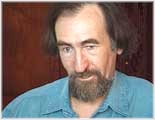
The long, long wait for justice
It has taken decades to set up an international tribunal investigating Khmer Rouge war crimes and the process remains fraught.
The Khmer Rouge nightmare that terrorised Cambodia during the 1970s ended nearly 30 years ago. In Rwanda and Sierra Leone, the wheels of justice turned quickly, with tribunals investigating events that kicked off within a few years of the mass killing. For Cambodians, it has been an agonisingly long wait for justice. Since the Khmer Rouge tribunal was finally established in Phnom Penh in 2006, they have been kept waiting again, with legal squabbles over rules of evidence delaying the indictment stage, when some senior leaders of the Khmer Rouge would be formally charged under international law with crimes against humanity and genocide. This hybrid tribunal, with international and Cambodian judges sitting together as co-prosecutors, was also adopted by the Sierra Leone tribunal. A special UN mission is in charge of legal assistance to the tribunal.
The final hurdle - the legal fees to be paid by foreign lawyers defending the accused (senior Khmer Rouge leaders) to the Cambodian bar council, has just been sorted out. The original demand, that foreign defence lawyers should pay around $4,900 a year for the privilege of addressing a "Cambodian court", has been knocked down to a reasonable $500 fee. The international judges threatened a boycott against "extortionate" fees that might have undermined the right of the accused to choose foreign counsel (the prosecution is led by a Canadian lawyer with a Cambodian co-prosecutor). French lawyer Jacques Verges, who has made his mark with his energetic defence of notorious clients including Klaus Barbie and Carlos the Jackal (Ilich Ramírez Sánchez), has promised to appear at the tribunal on behalf of Khieu Samphan, president of the Khmer Rouge regime and, as it happens, a former student classmate of Mr Vergès in Paris.
Why such monumental procrastination over Cambodia? In the aftermath of the Pol Pot bloodbath, international lawyers were largely silent, when, in 1979 and the early 80s, Cambodian survivors publicly called for an international tribunal. The US and some western governments preferred to support the bloody credentials of the Khmer Rouge - keeping them in the Cambodia seat at the UN - rather than the cause of international justice. Many observers in the 1980s and even the 90s predicted that a Cambodia tribunal would never happen. It was only in 1997 that the UN belatedly recognised that these terrible crimes should be addressed. Even then, UN-Cambodia negotiations dragged on for six years until a final agreement in 2003. Certainly no other tribunal has endured so many obstacles and so many governments vehemently opposed to the cause of justice. Finally, a tribunal was announced (officially known as ECCC - the Extraordinary Chambers in the Courts of Cambodia*) and set up last year. But even this glimmer of justice is under threat from many quarters.
The purveyors of doom and gloom have cast a pall of pessimism over proceedings. Rumours abound of international judges about to walk out, the tribunal on the verge of collapse, or speculation that Prime Minister Hun Sen's government is hell-bent on sabotaging the whole thing. But the Phnom Penh reality is far more complicated and nuanced. The decades of cynical neglect during which time several Khmer Rouge leaders have died, including Pol Pot, and the tortured history of negotiations has made this a uniquely complicated tribunal from the outset. No one is more deeply committed to a tribunal than Khmer Rouge victim Chhang Youk, who today heads the internationally respected Documentation Center of Cambodia (DC-Cam) the genocide research centre set up in 1994 after US Congress passed the Cambodian Genocide Justice Act. Mr Chhang told the Guardian: "I am very satisfied with the prosecution with both Cambodian and international lawyers. They are working just fine together there is no conflict here. They are a model of cooperation for the rest of the tribunal." DC-Cam has released more than 58,000 documents to the prosecution, including vital telegrams and communications sent by top leaders.
Unfortunately, arguments over legal fees and rules of evidence have obscured the impressive progress made by the joint prosecution team led by Canadian Robert Petit. Mr Petit, an international prosecutor who served in war crimes tribunals in Rwanda, Kosovo, East Timor and Sierra Leone, is among the most positive. "We've made a lot of progress, more than other tribunals [at this stage]. We have a pretty good record, especially considering the limited resources we have." The prosecution team is ready to proceed with indictments. The tribunal has not run aground, but it continues to sail through turbulent waters. As one insider who is trying hard to make the tribunal work describes it: "Some international judges seemed to have a hard time understanding anything about Cambodia, [and] more than a few Cambodian judges do not understand much beyond the borders of Cambodia." This is a recipe for acute misunderstanding.
It has been suggested that keeping this tribunal on the rails and on time to deliver justice requires a special UN envoy. The existing UN body is headed by Michelle Lee, a UN coordinator who runs the administration of the international component. In most UN missions, New York appoints a credible diplomat to head the mission and mediate any conflict with the host government. The history of UN-Cambodia negotiations over the tribunal has often been acrimonious. In 2002, the UN legal affairs team staged a unilateral walkout over the negotiations, which delayed the formation of the tribunal by at least a year. The tribunal has also faced hostility from China, who, it seems, never wanted it to happen in the first place. Flip-flops from Prime Minister Sen and his tribunal task force are partly explained by intense pressure from Beijing to save face from damning facts that will come out in the trial concerning their complicity and support for the Pol Pot regime.
The struggle to ensure this tribunal abides by international standards and solves conflicts quickly is crying out for dynamic mediator. The UN needs to appoint an outstanding diplomat or former statesman to help both sides avoid further deadlock. This tribunal will continue to be plagued with bottlenecks and problems until the UN finds a respected mediator, acceptable to both sides, to expedite the process. Guardian Unlimited © Guardian News and Media Limited 2007.
Sunday, May 06, 2007
Fawthrop's view on the KR Tribunal
Moore's Cambodia
Christopher G Moore is a highly-regarded writer, a Canadian who lives in Thailand, and who has written 18 novels and a collection of interlocked short stories. He's best known by his cult classics, Land of Smiles Trilogy, his behind-the-smiles study of his adopted country, Thailand, and his highly popular Vincent Calvino Private Eye series. His third book in the Calvino series was Cut Out (also published as Zero Hour in Phnom Penh) and was set in the Cambodia of the early '90s, with the UNTAC peacekeepers providing the backdrop to his story. In 2002, he was asked to return to Cambodia and to share his impressions of what he found. Here they are (courtesy of business-in-asia.com):
Genocide to Latte
Digesting mass murder has no clear time frame. In the case of Cambodia, between April 1975 until August 1979 when the Vietnamese arrived, the Khmer Rouge managed to kill about one-third of the population. A bullet, a shovel or hoe were killing tools. Starvation and disease added significantly to the piles of bodies accumulated during Khmer Rouge rule. By any standards, there had been a lot of murder. Tensions between those who supported the Khmer Rouge and those at the receiving end of their wrath were still strongly felt when UNTAC forces were sent to Cambodia with the mission to bring democracy, free elections, and a fresh start where both sides could reconcile themselves with the past and each other. In March 1993 I was in Phnom Penh as a journalist covering the UN venture into Cambodia. Drawing upon this experience, I wrote Zero Hour in Phnom Penh - the only novel that has emerged from this period. Almost ten years later, I returned to Cambodia to explore the changes that had intervened in a half a generation. “Time walks fast,” said the young Khmer woman DJ with a breezy California accent. She might have been in a shopping center in Los Angeles. But she had never been outside of Cambodia. And she was young; broadcasting in English to the generation of Cambodians born after the Khmer Rouge had been defeated. “Time walks fast,” she said again. “It seems like Monday but already it is Thursday. I like the fastness. But I don’t want to grow old. Do you want to grow old? Of course you don’t. Like me, you want to stay young forever. And I have been thinking about how much I like Santana. He wrote a song called Black Magic Woman. I wish I knew his nationality. I mean, he’s not American and he’s not black or Asian. I don’t know where he’s from. But I really think he’s cool.”
On the 7-dollar ride from the airport, the driver had tuned to an English language station in Phnom Penh. He understood English. The whole country was studying the English language. The bookshops stocked Madonna, an intimate Biography and John Grisham’s Summons. Study and How to do tapes for Chinese, French, and Japanese were displayed on the shelf. A little more than a generation before the Khmer Rouge had been killing anyone who spoke a foreign language or read foreign books. Now the streets were filled with students in their white shirts and black trousers carrying books and dreaming of riches.
The Monorom Hotel had been famous in 1993. Journalists on fat expense accounts stayed there, as they had done since the 1970s, preferably in one of the balcony rooms. It had been renamed the Holiday Villa, and had the look of an aging hooker with too much makeup. The old Royal had buckets in the main lobby catching water from the ceiling in 1993. A room could be had for $18 and the swimming pool was packed with weeds and mud. Today, the Singaporeans had transformed the hotel into a world class five star Raffles hotel with $300 rooms and offered a Champagne dinner for New Years at $70 per head.
At the old Russian market, in 1993 Khmer soldiers with amputated limbs hobbled after UNTAC soldiers who roamed the market which sold AK-47s for $75 and marijuana cigarettes in packs for 40 at $2. A decade later, the UNTAC soldiers had been replaced with tourists in their twenties looking through pirated DVD titles such as Die Another Day, 8 Mile, and Spiderman. The AK-47s and marijuana had vanished. The instruments of war and the drugs to fight pain and terror had given way to the new age of consumption. The images were not of the recent past but of the cartoon worlds churned out by moguls in Hollywood who couldn’t find Cambodia on a map.
That night was a full moon. The reflection shone over the Tonlesap as I walked along the quay. I had witnessed a part of a procession, which between one and two million Khmers had participated in. On the forty-five kilometer journey, Khmers lined the street. In spots they were stood ten deep. They had come out wearing their finest clothes. I stood along the quay, a military vehicle with red light flashing and siren blaring slowly led a procession of a half dozen floats. Monks sat in rows on several of the floats. On one float was a large glass case and inside were Buddha relics - hair, teeth and bone - and the procession was taking the relics to a new stupa built in the old capital of Odong. The new temple had been built on a mountain in Ponhea Leu district in Kandal Province.The King and Prime Minister and princes and officials were at Odong waiting. What we witnessed had historic meaning. It had been over three decades since the relics had been moved. Thirty years was a lifetime in Cambodia.
Later in my room, I watched the procession on TV. The truck with the cameraman outside of Phnom Penh captured people stepping forward, handing lotus flowers, incense sticks and Cambodian flags to the monks. Some of the trucks overflowed with such offerings. Looking at the vastness of the crowd - one to two million - one couldn’t help think they nearly equaled the victims of the Khmer Rouge genocide. All people and all factions had, however, come together in a bond of faith and belief. Had they put their differences aside for this procession or was this evidence of healing taking place?
That same Thursday evening a one-star general killed a nineteen-year-old who had allegedly beaten up his son. The new threat to the social order were the children of the ruling class who had formed gangs and roamed Phnom Penh, claiming turf, fighting each other, and other wise raising hell as untouchables. In this case, the general had been arrested. A day later another general, a former aging Khmer Rouge commander, was sentenced in a Phnom Penh court to life imprisonment for ordering the murder of three young tourists in 1994. The Australian, British, and French Embassies applauded the sentence. Like the movement of the relics, a general’s arrest for murder and another general carted off to prison on a murder conviction appeared as once in a life time incidents. The local papers covered the UN Secretary-General’s call for the trial of Khmer Rouge leaders in accordance with internationally recognized standards of justice. It was one thing to imprison one general who ordered the murder of foreign tourists, but what about his accountability for and participation in genocide, Cambodian killing Cambodian? No one raised the issue. There was only silence. Will true justice ever be brought to Cambodia? Will those responsible for the genocide be brought before such a tribunal? Or is it still the reality, that justice and truth are too threatening and divisive? A decade later after UNTAC, no one can answer these questions.
The Foreign Correspondent’s Club had just opened in the spring of 1993. As a journalist covering events on the ground, I found it a place to meet colleagues. A decade later, if there were any foreign correspondents in Phnom Penh, they had found a new watering hole. The FCC was overrun with tourists and NGOs with their toddlers and teenagers running around with the arrogance of a Khmer general’s son, racing among the tables with their pool cues and eating hamburgers. The FCC as a day-care-center, a tourist trap, a place to write postcards showed the distance between the days when UNTAC land cruisers roamed the streets, and the threat of war remained real, the possibility of genuine elections uncertain.
The new generation of tourists sat in internet cafes intermingled with restaurants where they had a communication connection with the outside world that we never dreamt of in 1993. While they were more connected in one way, in another they were more isolated, in their small booths, never giving them a chance to find that being cut off, being isolated brings advantages and insights into your location and also into oneself. Being connected gives a sense of certainty and safety. The tourists had never left home, family, friends, or colleagues. Physically they were in Phnom Penh but inside their minds they had gone nowhere. It is unlikely they would have heard of the Briton, Australian and Frenchman -all in their 20s - who in 1994 had been dragged off an upcountry train, held for two months, then killed.
In 1993, when Calvino arrived in Phnom Penh, he explored the back streets; he sought out the places where there might be a story - or a body. Sipping a latte at the Pink Elephant Restaurant with a half-dozen fellow travelers was not his way of understanding Cambodia. The old Lido was a place where the UNTAC soldiers rolled up in their white land cruisers, and with their $168 daily allowance, were a welcome sight for the mainly Vietnamese hookers who waived from the balcony. The Lido is no more. Recently, the government cracked down on prostitution in Phnom Penh in advance of hosting several regional conferences. But have the working girls disappeared from the scene or have they only faded away waiting until the guests leave? Only time will tell. Meanwhile, in Phnom Penh women in green frocks work under a hot mid-day sun sweeping the main streets. The vast complex of slums in the heart of town has been knocked down and replaced with a sprawling shopping center and office complex. Next door to his complex is a park named after the Prime Minister Hun Sen.
At the end of the day, Zero Hour in Phnom Penh is a unique crime novel as the private eye Vincent Calvino finds himself seeking to solve a private crime in the midst of a society that has suffer the trauma of mass murder. He comes to realize that any individual crime pales when compared to what happened to more than one million people at the hands of the Khmer Rouge. If Calvino were to return to Phnom Penh today, he would find many things unchanged - such as the fear of using justice and truth to resolve the past - and many things on the surface much changed - internet cafes, hordes of tourists, five-star hotels, and a new airport where the menu includes melted tuna au gratin, cheese cake, and latte. In Cambodia, the human conditions continues to stretch the void - from the horror of genocide to the vulgar ostentatious travelers who, in their own way, seek to have their cake and eat it, creating the illusions they have never really left home.
To read a lot more about Christopher G Moore, visit his website.
My other love, football - flashback to 1994
I recalled my first foray to Cambodia in November 1994 in a blog post a couple of days ago. Well, at the exact same time, the following article appeared in The Pink Un, the local sports newspaper. Again, I think proper sports stories were sadly lacking that week! I'm currently moving home and have found a few articles which I'll post here for posterity sake over the next few weeks. Football and music are my two loves, besides Cambodia.
Nothing to shout about says Brouwer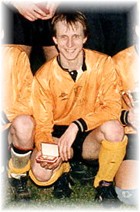
That is not far from the truth, either, as Brouwer’s record this season – 31 goals from 17 games - indicates. He was no so successful when he played for Division One Woodmancote – ‘I was in midfield’ – but has since repaid Hatherley secretary Pete Newcombe’s faith in him. “The Old Pats side I played for was disbanding and I wanted to found a new Saturday team,” he said. “I asked Andy to come and play for us and he has proved highly prolific and his goals helped us win the treble of Division Six, the County Cup and the Charities Cup. It is at a low level but no matter what the level, it is still a good record.” Brouwer (35) has not had it all his own way this season, however, and he has had a good partner in Paul Lawrence, who at 21 is almost the exception in a side with more than half its players over 30. Lawrence and Brouwer have hit 10 goals each in their last five league games.
A year earlier in 1993, I joined Hatherley Rangers, in the bottom division of the Cheltenham League and began a run of eight successful seasons in which we won two divisional titles, four other promotions, two cups and had a lot of fun. On a personal level, I bagged 237 goals in 220 games with Hatherley so I was happy with my contribution before retiring from active football service in April 2001. I can't believe its been six years since I hung up my boots.
Saturday, May 05, 2007
Sam Sotha's memoir
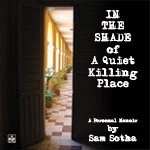
Like a million or so others, Sam Sotha and his wife Sony were forced out of Phnom Penh in April 1975. This highly moving personal story - in the form of a diary and drawings - describes Sam's and Sony's ordeal over the next four years and how during the course of their struggle, they found strength in their Christian faith. As they crossed Cambodia from one prison camp to another, the spiritual bond strengthened between husband and wife. That bond guided the couple through the darkest moments, when it seemed only a miracle could save them from certain death. The memoir, written in a refugee camp along the Thai-Cambodian border in 1980, is more than a survivor’s tale of endurance, it is the story of dedication of a man and woman who witnessed mass murder but never doubted their faith would come to their rescue. The hand drawn illustrations are an excellent addition to the publication.
After 15 years of resettlement in the United States - where he became a leading advocate for refugees and an active local political leader, whose contributions have been recognized with numerous awards - Sam Sotha returned to Cambodia in 1995. Ever since, he has devoted his life to help reconciling his country to the past. As the Secretary General of the Cambodian Mine Action Authority, Sam Sotha’s mission is to clear Cambodia of landmines. He also serves as an advisor to the prime minister, Hun Sen. The book is published by Thailand's Heaven Lake Press.
Friday, May 04, 2007
Cambodian cuisine in print
A book on Cambodian cuisine is scheduled for publication in December, titled The Food and Cooking of Cambodia by author Ghillie Basan. I spoke to Ghillie and she tells me that the contents (over 60 recipes and 250 photographs) are taken from a book she produced at the beginning of 2006, called The Food and Cooking of Vietnam & Cambodia. "The publishers have compiled it from the joint Vietnam & Cambodia book which I wrote several years ago. The former was compiled from research and travel, as I have had an interest in Vientam for a long time, having been friends with a number of American and Vietnamese survivors from the Vietnam war. The research involved travelling briefly and talking to many people in markets, restaurants, etc as well as friends who work in both countries. Now that things have opened up a lot, I would love to visit Cambodia with my children, but my main area of expertise is the Middle East and North Africa so I have to keep travelling there!" Ghillie was brought up in Kenya and Scotland. Following a degree in Social Anthropology at Edinburgh University, she taught English in Italy and Turkey, and has worked as a cordon bleu cook, a ski instructress, journalist, restaurant reviewer, and publisher. She is the author of a number of highly acclaimed books on Middle Eastern food.
Home from 'killing fields' - flashback to 1994
Let me take you all the way back to November 1994 and my first foray into Cambodia. To say it was a five-day white-knuckle ride of an adventure is perhaps understating exactly how thrilled I was, but also how apprehensive I felt at the same time. Here’s how my local newspaper, The Gloucestershire Echo, reported my visit the week after I returned home. Back in 1994 a visitor to Cambodia was big news here in the UK - they even sent a photographer out to my house - I can only imagine it must've been a slow week for news items!
Girlfriend’s joy as Andy comes back safe
Traveller Andy Brouwer has returned home safe and sound from war-ravaged Cambodia – to the relief of his worried girlfriend. Three western hostages, including a British tourist, were beaten to death by Khmer Rouge guerrillas during his stay in the country. Mr Brouwer, 35, of London Road, Cheltenham, was unaware of the concern over the hostages until his frantic girlfriend Sue Oliver managed to telephone him five days into his trip. “I was unaware of what was going on, because I had no access to television or radio news. As far as I was concerned, the threat was miniscule,” Mr Brouwer said. “The three guys who were captured had not done the right things, like keeping to the most obvious tourist routes. They had gone on a local train and they were captured after it was derailed. I was not going to put myself in that position.”
He was aware of the Foreign Office’s warning against visits because of the continued danger of Khmer Rouge guerrilla attacks in the country, which was the subject of the hit film The Killing Fields. “I had read a lot about Cambodia and knew a lot about it, but I wanted to get first-hand experience,” Mr Brouwer said. “My visit was not a back-packing holiday. I organised flights, hotels and tours before I went out, so I was not going into the unknown.”
Mr Brouwer visited the capital, Phnom Penh, and the Temples of Angkor – the biggest religious temple site in the world. Miss Oliver, 35, said: "I was very concerned to make sure he was all right, and it was only at the fourth attempt, because the lines were so bad, that I managed to get through to the hotel to speak to him.”
I recall that telephone call as I was sitting in my room in the Hawaii Hotel in Phnom Penh. My girlfriend was frantic with worry but I was completely oblivious to the events unfolding around me. Even King Sihanouk was interviewed on the TV news suggesting that tourists should stay away from the country! Sadly, the Hawaii hotel is no longer in business, whilst the chalets of the Diamond hotel in Siem Reap have been renamed. But my memories from my first adventure into Cambodia remain engraved on my consciousness and I’ve been lucky enough to return each year to add to my library of memories. Here's a picture of me from that first trip, sitting on the steep steps leading to the top of Angkor Wat.

Thursday, May 03, 2007
Sre Ambel turtle conservation
The Batagur baska or mangrove terrapin is a species of riverine turtle, and it's one of the most critically-endangered turtle species according to recent assessments by the relevant authorities. Batagur baska is also called the Royal Turtle in Cambodia because its eggs were a royal delicacy and is found only in the area of Sre Ambel, in the southwest coastal region. Everyone loves turtles, but its wildlife conservationists like Heng Sovannara who are doing their utmost to educate the local people of the need to protect their wildlife neighbours. Sovannara heads the Wildlife Conservation Society Batagur baska Conservation Project and they're doing a fantastic job in making sure the future of the royal turtle is assured.
One of the major problems in saving this species is that, although long lived, they do not reach breeding age until they are 25 years old. And from the information gathered over the past few years, it appears that there may be as few as a handful of breeding females remaining at present. The royal turtle can grow to more than 30 kilogrammes and reach almost one metre in length. They spend most of their lives in mangrove-lined tidal estuaries, but have been known to be caught by local fishermen many kilometres out to sea. During the breeding season both sexes change colour from grey to black. Adult males are considerably smaller than the females, easily distinguishable by their vivid yellow eyes. Egg-bearing females travel many kilometres upriver to find the ideal sandbank on which to lay their eggs. There they dig a pit of between one and one-and-a-half metres in depth, and over a six week period they can lay two or even three clutches of up to 20 eggs. As is the case with many reptiles, the older the female, the more eggs are produced. Cambodia is home to at least 12 tortoises and freshwater turtle species.
Now you know the facts, please visit the Sre Ambel Batagur baska website to find out more and how you can help. And here's a story about the royal turtles by one of my favourite writers, Karen Coates. Click here.
Wednesday, May 02, 2007
Seda makes her mark
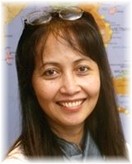
Kite Flying in Cambodia
If you are in Cambodia during late November look into the bright blue skies above you and you'll no doubt encounter the Khmer obsession with kite flying, as that month signifies the start of the kite season, which lasts until March. Its a much revered past-time, has its roots in ancient Cambodian history, was always supported by the Royal Family and has its own festival (usually in November and a month after the water-festival). The Kite Museum in the capital houses many examples of Khmer kites at its headquarters opposite the Buddhist Institute in Phnom Penh. The major figure in the return of kiting as not only a sport but also an important symbol of Cambodian cultural identity is Sim Sarak, a director general of the Cambodian Ministry of Culture and Arts. Sim was an enthusiastic flier as a boy and never forgot this early fascination. He's also written a book, alongwith his wife, on Khmer Kites which you can read on-line here.
Tuesday, May 01, 2007
After the Heavy Rain
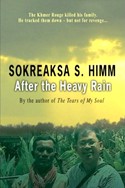
In this second book, he describes how he tracked down his family's killers, one by one, embraced them, gave them a scarf of friendship and presented each with a Bible. A tale of forgiveness. Reaksa had left Cambodia for the border camps of Thailand and was later accepted to live in Canada. However, he found himself drawn back to the country of his birth and in recent years he's taught at the Phnom Penh Bible School to pastors and church leaders, volunteered at a psychiatric hospital, funded and built a clinic, school and five churches in the area.
